


How to Choose the Best Manual Milk Frother for Home Coffee?


A manual milk frother helps coffee lovers prepare creamy drinks with simple tools and flexible techniques. For home coffee, buyers can also consider handheld milk frothers and rechargeable electric whisks. These tools suit lattes, cappuccinos, matcha, and other milk-based beverages. For B2B buyers, the right product should balance build quality, operating convenience, customization, and wholesale value. Understanding these factors helps distributors select products that meet customer needs.

Which Manual Milk Frother Suits Different Coffee Habits?
Home users prepare coffee in different ways. Some make one cup each morning, while others serve several drinks throughout the day. Therefore, buyers should assess how customers will use the frother before choosing a product.
Match the Frothing Method to Daily Use
A traditional manual pump frother uses a plunger and mesh screen. Users move the plunger to introduce air into the milk. This design suits customers who prefer hands-on preparation without batteries.
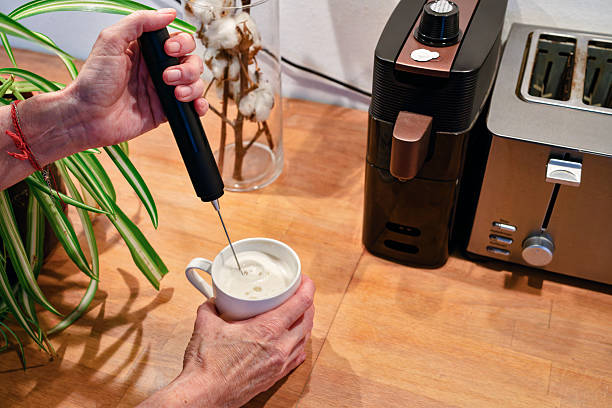
A handheld electric milk frother offers another approach. Its motor spins a whisk to aerate milk with less manual effort. For example, model J-3 features three speed settings. Users can adjust the speed for different mixing tasks.
This model also supports coffee preparation, matcha mixing, and light egg whisking. Consequently, retailers can position it as a versatile kitchen accessory. Buyers can explore related coffee and tea tools when planning a broader product range.

How Can Buyers Evaluate Frothing Quality?
Frothing quality depends on milk type, temperature, technique, and whisk design. Therefore, buyers should assess the complete user experience rather than rely on product appearance alone.
Check Whisk Construction and Speed Control
A stainless steel whisk can support repeated use with appropriate cleaning. Buyers should inspect the whisk connection, motor housing, and control buttons. These details influence handling and long-term product satisfaction.
For electric models, multiple speed settings offer greater control. Lower speeds can help with gentle mixing. Higher speeds may suit faster aeration, depending on the liquid and whisk design.
Users should follow the supplier’s instructions for liquid depth and operating time. They should also avoid immersing electrical components. These habits help maintain consistent performance during regular use.
For manual pump models, inspect the mesh, plunger movement, and container stability. A smooth mechanism can make repeated preparation more convenient. Ultimately, product testing should reflect typical customer routines.

Which Materials and Features Support Long-Term Value?
Material selection affects durability, cleaning, and perceived product quality. At the same time, practical features can improve customer satisfaction without adding unnecessary complexity.
Review Materials, Maintenance, and Handling
Metal construction can provide a solid feel for handheld frothers. Stainless steel whisk components also suit repeated contact with food when they meet applicable food-contact requirements. Buyers should request material documentation where needed.
For electric models, examine the handle grip, switch response, and whisk attachment. A compact cylindrical design can fit easily into many kitchen storage spaces. However, buyers should confirm the dimensions before finalizing packaging.
Cleaning guidance also matters. Users should clean the whisk promptly after use and keep the motor section dry. Before bulk purchasing, request samples to evaluate assembly quality and everyday handling.
The following table summarizes key selection factors for wholesale buyers.
| Selection factor | What to check | Business value |
|---|---|---|
| Frothing method | Manual pump or electric whisk | Serves different usage preferences |
| Whisk material | Stainless steel or documented food-contact material | Supports quality evaluation |
| Speed settings | Single speed or multiple speeds | Helps match different mixing tasks |
| Cleaning | Detachable parts and care instructions | Improves user convenience |
| Customization | Logo, color, and packaging options | Supports private-label programs |
| Order terms | Minimum order and lead time | Helps plan inventory |
Buyers can also review product specifications and selection guidance before placing a bulk order.
How Should B2B Buyers Compare Price and Customization?
Wholesale purchasing requires more than a low unit price. Buyers should evaluate product quality, order flexibility, delivery schedules, and customization together. This approach helps businesses plan competitive offers while maintaining product standards.
Calculate Value Across the Supply Process
Request quotations that clearly state the included accessories, packaging, logo method, and shipping terms. Then compare offers using the same specifications. This process provides a more useful cost assessment.
Model J-3 supports custom logo requests and comes in black and white. Its minimum order quantity is 60 pieces. Samples typically require five to seven days, while production delivery takes approximately ten to fifteen days. Confirm the schedule with the supplier before ordering.
The listed packing configuration contains one piece per box and sixty pieces per carton. Each carton measures fifty by forty-four by thirty-three centimeters and weighs fifteen kilograms. Buyers can use these details to estimate storage and freight requirements.
For repeat orders, discuss quality inspection criteria and acceptable sample variations. Also confirm payment arrangements and shipping methods in advance. These steps support smoother procurement and clearer expectations.

What Should Buyers Confirm Before Ordering a Milk Frother?
A structured supplier review helps importers, distributors, and private-label brands reduce purchasing uncertainty. In addition, sample testing can reveal practical details that product listings may not fully explain.
Use a Practical Pre-Order Checklist
Before confirming a bulk order, review these points:
- Test whisk stability and speed control.
- Check material finish and assembly consistency.
- Confirm the product’s intended cleaning method.
- Review logo placement and packaging artwork.
- Request relevant safety and material documents.
- Confirm sample timing, production lead time, and shipping terms.
For electric products, verify the power source, charging method, and included accessories with the supplier. Do not assume a rechargeable battery is included unless the specification confirms it. Buyers should also check applicable market requirements before importing.
A supplier that communicates clearly can help buyers manage specifications and customization more efficiently. Moreover, agreed inspection standards make repeat purchasing easier to coordinate. These practices support dependable sourcing and better value over time.
Conclusion
Choosing the right manual milk frother starts with customer needs, preparation habits, and product construction. Traditional pump models suit hands-on coffee preparation. Meanwhile, rechargeable electric whisks offer speed control and broader mixing uses.
For B2B buyers, model J-3 provides three speeds, black and white color options, and custom logo support. Its sixty-piece minimum order quantity offers a defined starting point for wholesale planning. Evaluate samples, confirm specifications, and compare the full order cost before committing.
With clear quality criteria and suitable customization, businesses can build a practical coffee accessory range. Contact the supplier to discuss sample availability, branding options, and a wholesale quotation tailored to your market.